
Protein supports cell repair and growth and has many metabolic functions. A protein is composed of amino acids, which are classified in essential and non-essential. Essential amino acids cannot be produced by our body, while non-essential are regularly synthesized. To complete a protein, all essential amino acids should be present. Even though there are many dietary sources of protein, all animal products are considered complete proteins, while plant sources lack some essential amino acids and are considered “incomplete” (4). So, it is important to include in our diet all essential amino acids.
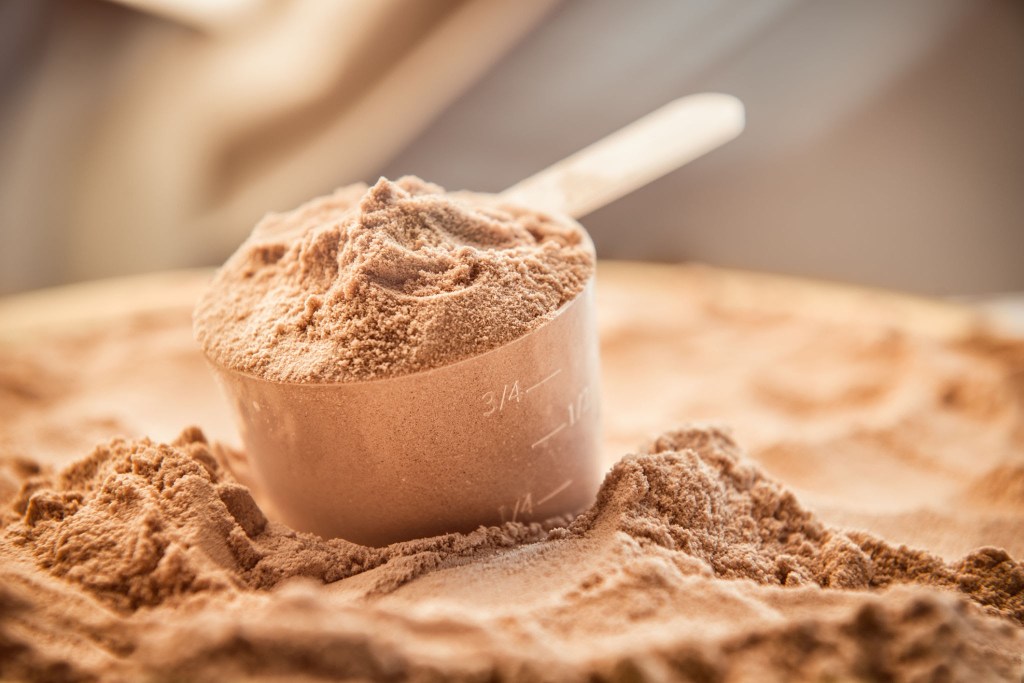
We will discuss the best options, when it comes to timing, the source, and the recommended amount of protein consumption. But first, we should define:
Why Do I need Protein?
If you participate on a high intensity program, you need more protein to:
- Support recovery, immune function, muscle tissue repair, maintenance, and growth.
- Promote and maintain a positive net muscle protein balance (protein synthesis greater than protein breakdown) (3).
- Enhance muscle protein synthesis. Exercise stimulates muscle protein synthesis, but this process is enhanced with protein consumption after training, and protein synthesis could last up to 24 hrs. (1).
- Consumption of protein with carbohydrates (glucose) during recovery could increase exercise induced adaptations in muscle, as changes in gene expression promote muscle hypertrophy (3).
- For some individuals, it is not easy to obtain that much protein from food alone. In some cases, protein supplementation is recommended (4).
When and what kind?
Protein synthesis could be enhanced by protein consumption before or after training (3), but research has shown variable results, based on the protein source.
After training: A study showed that 3-4 g of Leucine (essential, branched chain amino acid present in milk, thus in whey protein) supplementation results in greater muscle strength and hypertrophy. Leucine has been recognized as the main stimulator of protein synthesis. However, it is more effective when combined with glucose (Leucine’s action is insulin dependent). For that reason, chocolate milk has been widely used in this type of research. Leucine seems to be as effective alone as when all branched chain amino acids (BCAAs) are present (2, 5).
Before training: the use of essential amino acids seems more effective to promote muscle gains. Milk proteins (whey and casein) have shown more effective than soy protein, for strength and hypertrophy. Whey is more effective for strength gains, when compared to casein.
How much protein should I consume?
For muscle hypertrophy: 1.2 – 2g per kilogram of body mass, per day (2,4). As a supplement, 20-30 g of high-quality whey protein seems to be the best option, in addition to dietary protein.
The excess in protein synthesis influenced by a high protein intake seems different at rest than after exercise, but that is sensitive to the amount of protein consumed. In right amounts, protein consumption after exercise creates an anabolic effect. However, when in excess, could cause our body to reduce protein synthesis, negating the benefits of the supplementation (2).
Conclusion
Once protein has been ingested, anabolism is enhanced for about 3 hours, peaking at about 45-90 minutes. Hence, the ideal protein supplement after training should contain whey protein (easily digested, containing 3-4 g of leucine). Preferably, the protein supplement should be combined with a fast-acting carbohydrate (such as glucose, found in fruit), as leucine is much more effective that way (5).
It is always recommended to consult your physician or dietician before any type of supplementation.
For a whey protein smoothie recipe, consider: https://wordpress.com/block-editor/post/strengthcoachfernando.com/246
Cheers,
Fernando Rosete
References:
- Areta, J. L., Burke, L. M., Ross, M. L., Camera, D. M., West, D. W., Broad, E. M., … & Hawley, J. A. (2013). Timing and distribution of protein ingestion during prolonged recovery from resistance exercise alters myofibrillar protein synthesis. The Journal of physiology, 591(9), 2319-2331.
- Gropper S, Smith J, Groff J: Protein. Advanced Nutrition and Human Metabolism. (2009). California: Wadsworth Cengage Learning, 179-250. 5th
- Hawley, J. A., Tipton, K. D., & Millard-Stafford, M. L. (2006). Promoting training adaptations through nutritional interventions. Journal of sports sciences, 24(07), 709-721.
- Kreider, R. B., & Campbell, B. (2009). Protein for exercise and recovery. The Physician and sportsmedicine, 37(2), 13-21.
- Stark, M., Lukaszuk, J., Prawitz, A., & Salacinski, A. (2012). Protein timing and its effects on muscular hypertrophy and strength in individuals engaged in weight-training. Journal of the International Society of Sports Nutrition, 9(1), 54.
 Applied Exercise Science