
Tactical jobs require the individual’s ability to adapt and overcome many stressors, including schedule changes and fatigue. When the job requires duty during nighttime, this causes a “jetlag” or “shiftlag” effect, depending on the duration of the event. The long-term effects of continuous shiftlag or jetlag are well documented as detrimental and include severe health issues, such as cancer and cardiovascular disease (1,5). Our internal “clock,” otherwise known as circadian rhythm, works based upon two signals: light and a hormone called melatonin (“darkness hormone”). Our eyes have light sensors on the retina, specific for sending non-image related signals to the brain. In the absence of light signals, melatonin is secreted. Everyone has his/her own melatonin cycle, which is repeated over time and determine our own circadian rhythms. That is, morning time, as we wake up, light signals melatonin levels to decrease and we go on with our daily activities. Towards the end of the day, as it starts getting dark, the absence of light signals from the retina, induces melatonin secretion and eventually we get sleepy and rest. Melatonin is highest in the middle of the night and starts declining as we are getting ready to wake up (Fig. 1).
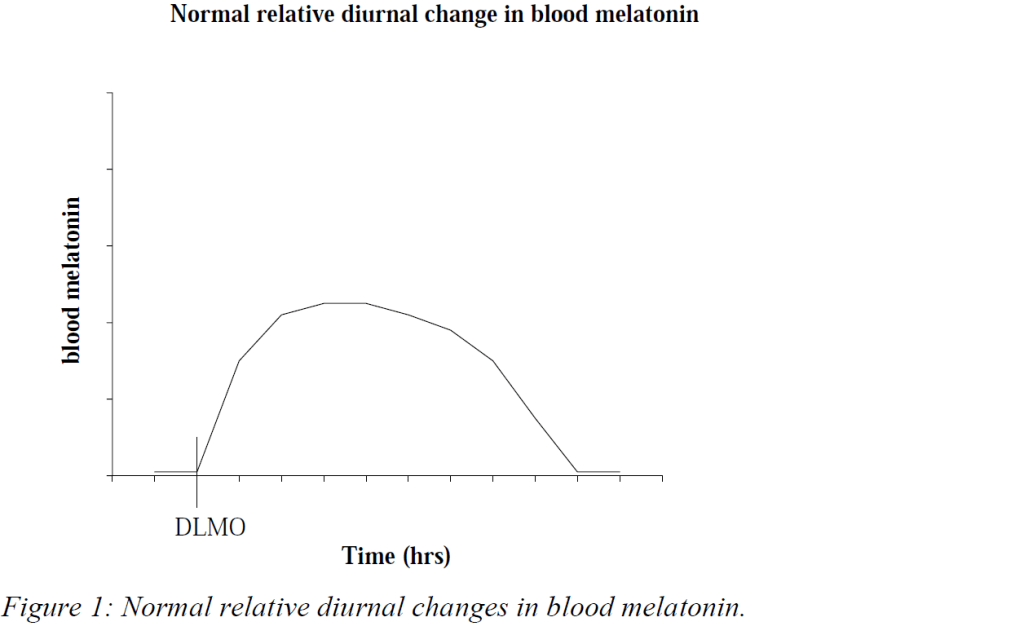
In figure 1, the regular, daily changes in melatonin are illustrated, including the Dim Light Melatonin Onset (DLMO), which takes place around 2100 for people who keep “normal” sleeping patterns (going to bed around 2300 and waking up around 0700). Melatonin rhythm is different for each of us but is individually consistent.
Jetlag and Shiftlag
Jetlag occurs when we travel and there are temporary changes on our usual internal clock, as our regular light-cues are disrupted (changes in sun-rise/sunset times in our new location). Jetlag is recognized as a temporary sleep disorder as we are sleepy during the day and suffer insomnia at night, as our internal clock is out of phase. Jetlag produces cognitive impairment, limited physical performance, alterations in mood and gastrointestinal malfunction. When traveling east, the body takes about 24 hrs. to adapt, for each time zone crossed. When traveling west, most people can adapt in less than one day.
Shiftlag results from quick changes in schedule within same time zone, with similar, negative consequences, when compared to jetlag. The circadian stress caused by a quick shift between day work and night work, is comparable to the stress caused by jetlag, after flying half-way around the world.
Possible Solution
Research on Air Force personnel has documented individuals’ ability to manipulate circadian rhythms in response to the effects of jetlag and/or shiftlag, with promising, positive effects (3,4). The usage of sunlight or artificial light, as well as avoidance of light at specific times and supplementation of melatonin could help re-programming sleep and wake-up times. Nevertheless, some researchers (2) have been reluctant to use melatonin supplementation in the USA, because of the lack of regulation that questions the purity, stability and concentration of a given melatonin dosage.
In Canadian Air Force studies (3,4,5), found circadian phase shifting is possible by ingesting melatonin at the appropriate time, and/or adding light treatment, as well as avoiding light to successfully create the ideal circadian phase shift. Figure 2, shows how the ingestion of melatonin in the late afternoon (at 1600), induces physiological night early, creating a circadian phase advance.
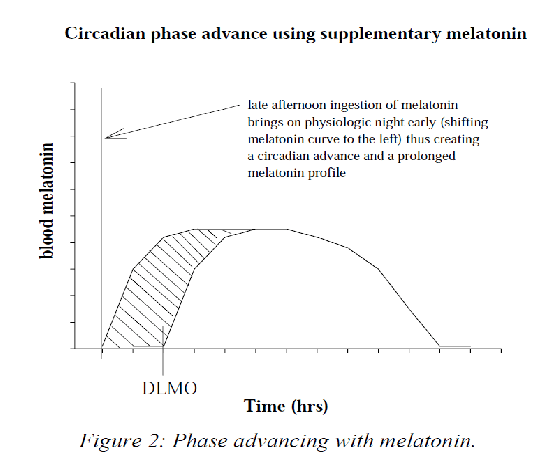
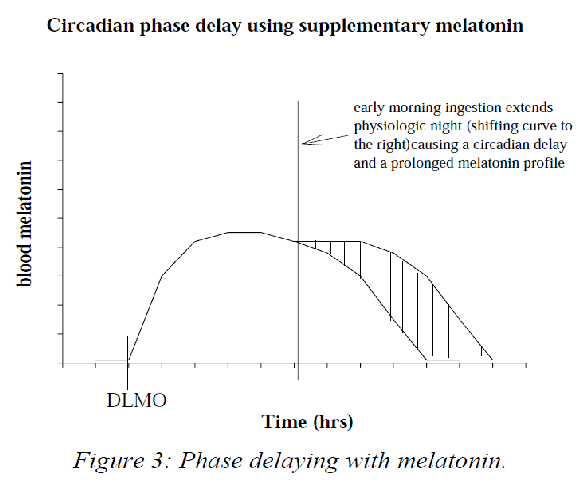
Figure 3 shows a circadian phase delay caused by the ingestion of melatonin early in the morning (at 0600).
The best results have been recorded when combining light treatment and melatonin supplementation (3,4,5):
Phase Advance with Melatonin and Light- Research (3,4,5) showed best results with the supplementation of 3 mg. of melatonin, taken 5 hours before DLMO (at 1600 for individuals with a normal DLMO at 2100) and light treatment 9-10 hours after DLMO (between 0600 and 0700).
Phase Delay with Melatonin and Light- treatment should take place 5-6 hours after DLMO (at 0200 or 0300) and ingestion of 3 mg. of melatonin, taken 11 hours after DLMO (at 0800, for an individual with a normal DLMO at 2100).
Scientific studies (5) suggest circadian planning should be considered to control fatigue and ensure readiness in Air Force operations. Thus, flight schedules should be refined to ensure proper shift work schedule changes.
Light treatment used in research includes: https://feelbrightlight.com/products/ producing monochromatic green light, recommended when solar light is not available.
WARNING: This article has been written for educational purposes. Melatonin supplementation should be considered only when approved by a physician.
References:
1. Arendt J (2009) Managing jet lag: Some of the problems and possible new solutions. Sleep Medicine Reviews 13: 249-256.
2. Caldwell JA, Mallis MM, Caldwell JL, Paul MA, Miller JC, Neri DF (2009) Fatigue Countermeasures in Aviation. Aviat. Space Environ. Med 80: 20-59.
3. Paul MA, Miller JC, Love RJ, Lieberman HR, Blazeski S, Arendt J (2009) Timing Light Treatment for Eastward and Westward Travel Preparation. Chronobiology International 26: 867-890.
4. Paul MA, Miller JC, Gray GW, Love RJ, Lieberman HR, Arendt J (2010c) Melatonin treatment for eastward and westward travel preparation. Psychopharmacology 208: 377-387.
5. Paul, M. A., Gray, G. W., Lieberman, H. R., Love, R. J., Miller, J. C., & Arendt, J. (2010). Management of circadian desynchrony (jetlag and shiftlag) in cf air operations (No. DRDC-TORONTO-TR-2010-002). DEFENCE RESEARCH AND DEVELOPMENT TORONTO (CANADA).
 Applied Exercise Science